
ICDC Conference: Moldova’s response to disinformation begins with trust
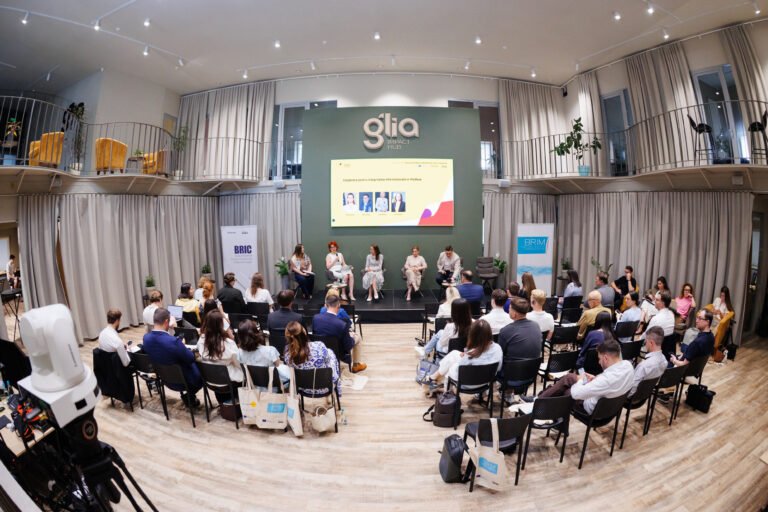
On 10 June 2026, ICDC brought together representatives of state institutions, development partners, civil society, journalists, content creators and technology experts to discuss how Moldova is responding to disinformation in practice. The message that emerged was clear: disinformation cannot be tackled through isolated rebuttals alone. It requires public trust, sustained engagement, and communication that is relevant to people’s everyday realities at the community level.
The first panel framed disinformation not simply as a communications problem, but as a challenge to social cohesion and democratic resilience. Speakers argued that public debates around reforms, identity, migration and security are often manipulated because they touch people’s daily lives and anxieties. Ana Revenco, Head of the Center for Strategic Communication and Combating Disinformation (StratCom), stressed that social cohesion should be treated as part of the state’s security and resilience response, while Lina Botnaru, Programme Officer for Communication and Visibility at the EU Delegation to the Republic of Moldova, pointed to the gap between official reform language and the way people experience those changes locally.
That emphasis on local presence and proximity ran through the whole conference. Speakers repeatedly highlighted that people are more likely to trust information delivered through familiar local voices and genuine engagement. As Daniel Vodă, Strategic Communication Expert at IPRE, noted: “If we are not present in the community, if we don’t discuss at the grassroots with mayors, doctors, priests, with everybody, there will be someone else who will tell our message or story instead of us.” The discussion highlighted a simple but important reality: trust cannot be built through messages alone. It grows through visible action, meaningful engagement and relationships that people see and experience in their everyday lives.
The second panel focused on communication formats and channels. Speakers noted that television still matters, but audiences now consume information wherever they are, especially online. They made the case for content that is accessible, creative and rooted in everyday culture, including humour, illustration, short video and infotainment. The point was not to move away from serious journalism, but to present it in ways that people will actually notice, understand and engage with.
The final panel addressed technology, AI and digital tools. Here too, the conclusion was practical rather than abstract. Fact-checking remains necessary, but it has to be paired with media literacy, pre-bunking and faster ways of analysing content at scale. AI was presented as both a challenge and an opportunity: hostile actors can use it to produce manipulative content more quickly, but journalists, researchers and civil society can also use it to detect patterns, verify information and respond more effectively.
Taken together, the conference showed that Moldova’s response to disinformation is becoming more coherent, practical and rooted in trust-building. The discussion was not about one-off debunks or simple counter-messaging. It was about building resilience through trust, local relationships, creative communication and smarter use of technology. For a country under constant information pressure, this is not just a media strategy. It is part of protecting democratic debate and public trust.
Trending Post
CICD (c) 2024