
Civic Engagement Conference 2026: Resilience to disinformation starts with critical thinking and social cohesion
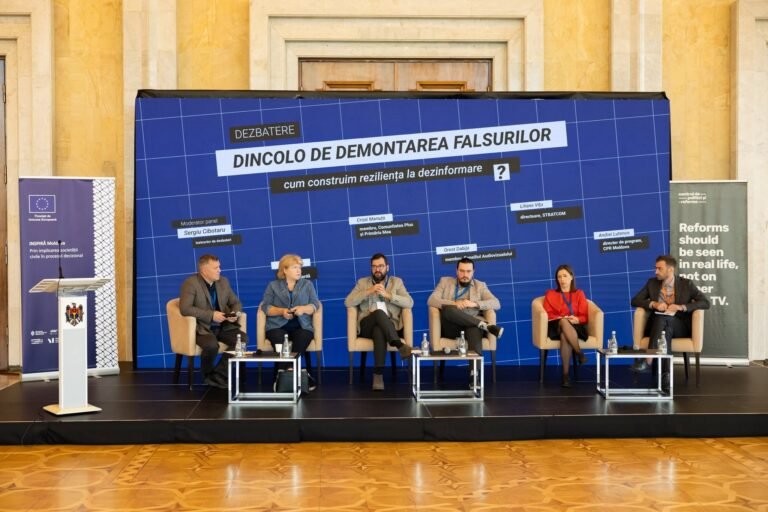
Disinformation becomes more effective when it exploits genuine grievances, artificially amplifies certain issues, and turns differences of opinion into sources of conflict. In this context, information resilience depends on people’s ability to critically assess messages, the credibility of independent journalism, and trust within communities. These were the key takeaways from the workshop “Beyond debunking falsehoods: how do we build resilience to disinformation?”, held as part of the Civic Engagement Conference 2026, organised by the Centre for Policies and Reforms.
An important point of discussion was how foreign information manipulation and interference (FIMI) operations exploit everyday concerns to shape public perceptions. Prices, utility bills, the quality of public services, and corruption can all serve as starting points for narratives designed to deepen social divisions.
“The focus is now on creating this kind of chaos, where people can no longer distinguish between what is right and what is wrong,” said Liliana Vițu, Director of Stratcom.
This strategy shifts attention away from verifying individual claims towards creating a broader climate of confusion, making it increasingly difficult to distinguish credible information from manipulation.
Investigative journalism helps uncover influence networks and document attempts to manipulate voters. Alina Radu, Director of Ziarul de Gardă, highlighted the importance of solidarity among newsrooms in sharing investigations into foreign interference in Moldova’s electoral processes.
The media’s ability to investigate and explain such phenomena also depends on available resources. The financial sustainability of independent newsrooms and civil society organisations is therefore essential to the continuity of their work.
At the same time, institutional communication plays a crucial role in countering disinformation. Public authorities need to communicate quickly, clearly, and accessibly, addressing citizens’ legitimate concerns and providing the context needed to understand decisions and events.
Trust and the ability to engage in dialogue are also built through direct interaction. Reading clubs, cultural associations, community activities, and public consultations create spaces where people with different experiences and opinions meet and discuss shared concerns.
Andrei Lutenco, a workshop participant and conference organiser, emphasised the value of these spaces in encouraging debate and exposing people to a broader range of perspectives and viewpoints.
Another dimension discussed was lifelong media literacy education. Orest Dabija, a member of the Audiovisual Council, stressed the need for media literacy training for all age groups, particularly older people, who may be more vulnerable to manipulation, fraud, and false narratives.
In conclusion, the workshop outlined an approach to information resilience that brings together media literacy, independent journalism, institutional responsibility, and social cohesion. A society’s ability to respond to manipulation is strengthened both by access to verified information and by the presence of communities where people can discuss issues, ask questions, and find common ground despite their differences of opinion.
Trending Post
CICD (c) 2024