
Independent media strengthen Moldova’s resilience to disinformation and FIMI
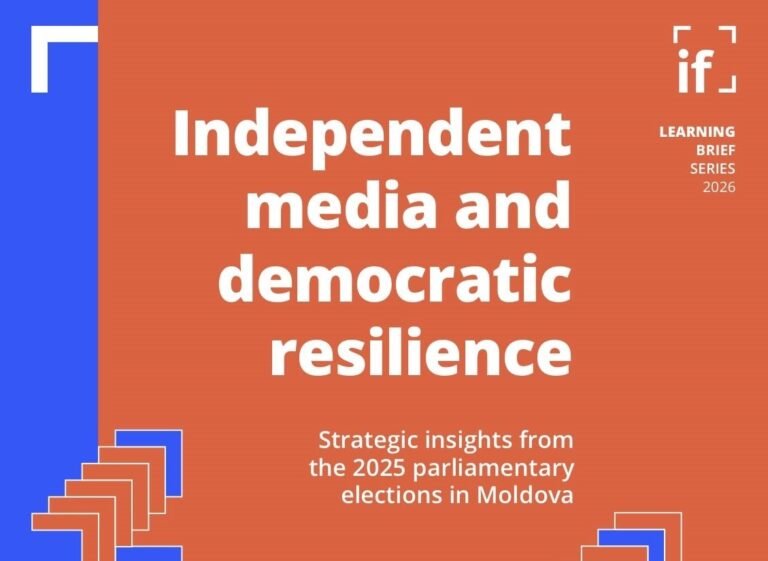
A new study examining Moldova’s 2024 and 2025 electoral cycles highlights the role of independent media in countering disinformation and foreign information manipulation and interference (FIMI), with particular focus on the contribution of regional outlets, including ICDC members TV-Nord (Nord Press Club), SP and Nokta.
Disinformation in Moldova became increasingly localised during the 2025 parliamentary elections, with foreign narratives repackaged and amplified by local political figures, media personalities, clergy representatives and online content creators. This made manipulation harder to identify and gave it greater domestic legitimacy, according to “Independent Media and Democratic Resilience: Strategic Insights from the 2025 Parliamentary Elections in Moldova”, a study published by the International Fund for Public Interest Media (IFPIM).
The study identifies independent media as essential to protecting the integrity of public debate, particularly in regions with limited access to reliable information, including Gagauzia, the Transnistrian region and northern Moldova.
The study highlights the complementary role of regional media in reaching underserved communities, addressing local concerns and providing verified information in Romanian and Russian.
Among the featured outlets are ICDC members TV-Nord (Nord Press Club), SP and Nokta. TV-Nord is recognised for its accessible, locally relevant reporting and its role in informing communities in northern Moldova. Its executive director, Viorica Postolachi (Bugulean), emphasises the importance of regional journalism:
“Regional media gives a voice to communities, brings local issues to light, and provides verified, relevant information where national coverage often falls short.”
The study also highlights SP’s response to false reports about alleged terrorist threats in schools in Bălți, which circulated shortly after the elections. By publishing explainers based on information verified by authorities, SP addressed public concerns and countered narratives suggesting that a pro-European electoral victory would lead Moldova into war. Its reporting circulated widely in local chat groups, reinforcing the outlet’s role as a trusted source of information.
Nokta, which primarily produces Russian-language content for audiences in Gagauzia and Tiraspol, is highlighted for its contribution to reaching communities particularly exposed to disinformation. The study notes that Nokta’s social media engagement nearly doubled in 2025, supported by audience analytics and tailored content formats that helped attract new audiences and strengthen trust among existing readers.
The study identifies investigative journalism as a key tool in exposing FIMI networks, electoral corruption and political manipulation. It also highlights the importance of locally grounded fact-checking and timely reporting in countering false narratives before they fuel public anxiety.
Another significant finding is the growing collaboration among independent media during the 2024 and 2025 electoral cycles. By amplifying and building on each other’s investigations and reporting, outlets extended the reach of public-interest journalism and contributed to a more connected media ecosystem.
The study also stresses the importance of adapting content to changing audience habits. With social media used by around 80% of Moldova’s population as a source of information, independent outlets increasingly rely on short explainers, visual storytelling, accessible language and platform-specific formats to engage audiences.
The report concludes that regional and multilingual media, audience engagement, collaboration and sustainable funding are essential to strengthening Moldova’s democratic resilience. However, independent media continue to face financial insecurity, limited advertising revenues and shortages of qualified personnel, making long-term support particularly important.
The experiences of TV-Nord, SP and Nokta demonstrate the contribution of regional journalism to reaching vulnerable communities, providing reliable information and countering disinformation beyond election periods.
The study was authored by Victor Gotișan and published by the International Fund for Public Interest Media (IFPIM) in September 2026.
Trending Post
CICD (c) 2024