
Introduction

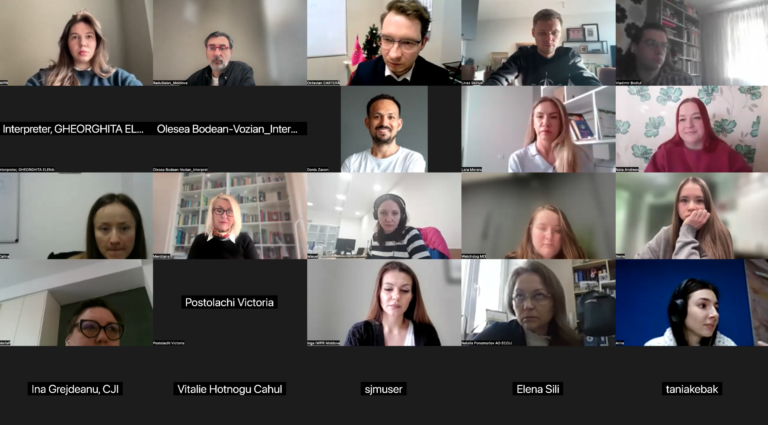
On January 20, 2026, the Independent Countering Disinformation Centre (ICDC) hosted an online Regional Learning Call titled “Information Resilience Innovations for Cross-Country Learning.” The event brought together ICDC member organizations, regional partners, and international experts to share practical tools and research to strengthen societal resilience against foreign information manipulation and interference (FIMI). This learning call is part of ICDC’s ongoing series of practitioner-focused discussions that aim to facilitate peer learning and encourage innovative strategies to counter disinformation.
While earlier Regional Learning Calls concentrated mainly on elections, cybersecurity, and urgent disinformation threats, this session aimed to focus more on long-term capacity building through tools, technology, and engaging learning methods.
Today’s event followed a structured format that integrated tool demonstrations with moderated discussions and participant questions. Although five presentations were initially planned, one session focusing on a gender disinformation dashboard was postponed due to speaker’s personal issues and will be rescheduled. The updated agenda provided additional time for discussion and exchange after each presentation.
Presentation of the News Alchemist game
The first presentation introduced News Alchemist, an educational game aimed at helping users identify cognitive biases and logical fallacies, and understand their influence on information consumption and public opinion. Vladimir Bodiul, a Game Designer and Lecturer at the Technical University of Moldova, presented the tool, highlighting his background in both game development and journalism. He explained that this tool complements traditional media literacy education by providing an experiential, hands-on learning approach.
In the game, players take on the role of a journalist in a simulated information environment, making editorial decisions about headlines, framing, and whether to use “bias cards” that represent cognitive distortions. These choices impact public opinion, narrative development, and the player’s standing. The game incorporates financial incentives, reputational considerations, and pressures from various actors, mirroring real-world media challenges.
A live demo demonstrated how the same event can be framed differently, with diverse societal effects. Players are given profiles based on their cumulative decisions, encouraging reflection on editorial patterns rather than aiming for a single “correct” choice. The game blends handcrafted storylines with AI-generated content, such as headline variations and reader comments, ensuring flexibility for different contexts.
Initial testing with students suggests that News Alchemist improves users’ ability to recognize bias and think critically. While short sessions did not change students’ political views toward the media, they showed increased confidence in identifying biased framing and a more cautious approach to interpreting information. Importantly, these skills were developed through gameplay rather than formal instruction. The project is expanding with teaching materials and plans for train-the-trainer sessions, with ongoing discussions with Moldova’s Ministry of Education about wider classroom integration. The game is available in Romanian, Russian, and English, and it is free to access.
Presentation of the Disinfomration Challenge
Linas Skirius, Co-Founder of the Civic Resilience Initiative (Lithuania), delivered the second presentation, showcasing the Disinformation Challenge – a gamified media literacy and OSINT learning platform set in a Minecraft-style environment.
Skirius explained that CRI adopted game-based learning after recognizing the shortcomings of traditional classroom methods, especially for engaging younger audiences on complex issues like disinformation. The platform places players in the role of a student investigating claims by a self-proclaimed “expert” promoting controversial educational reforms allegedly backed by science. Players use verification techniques – such as source checks, reverse image searches, and cross-referencing – to evaluate credibility and build evidence-based arguments. The game enhances media literacy, critical thinking, and structured debate skills.
To sustain the initiative, CRI invested significantly in teacher support, including certification schemes, incentives, and practical toolkits that enable educators to run sessions independently. So far, about 300 lessons have been supported across the Baltic states, reaching thousands of students through both educator-led and teacher-run activities. The game is available in multiple languages, including English and Russian, and has received positive feedback from students. Technical issues, such as installation requirements and current Windows compatibility, were also addressed. CRI expressed openness to further collaboration and to exploring the tool’s use in Moldova.
Presentation of the Reaction Analysis System (RAS)
The third presentation covered the Reaction Analysis System (RAS), an AI-driven platform created by IWPR to support strategic communication in Moldova. Denis Zacon, founder of AI SKILLS and a member of the Strategic Council on AI in Education, introduced the tool. RAS predicts how various segments of the Moldovan population might respond to specific messages prior to their release, especially those concerning European integration.
This platform combines a detailed analytical framework with sociological research and advanced AI models. Users submit draft messages and receive structured feedback across seven audience archetypes, including pro-European, conservative, urban professional, rural vulnerable, neutral, and pro-Russian segments. The output highlights likely reactions, explains underlying drivers, and offers guidance on message adaptation and risk mitigation.
It was clarified that RAS is currently in a controlled trial phase, with access being granted selectively for careful testing and refinement. The discussion emphasized the importance of grounding AI-supported analysis in sociological research rather than using generic AI tools. Participants raised questions about transparency, archetype updates, and sustainability, which will be addressed through ongoing testing and user feedback. It was confirmed that the plan is to initially share the tool within its network and expand access gradually based on lessons learned.
Presentation of the IMS Audience Segmentation Study platform
Nata Andreev, a Gender Strategist at International Media Support (IMS), delivered the final presentation on the IMS Audience Segmentation Study platform. Spanning 2023 to 2025, the study aims to help media and civil society organizations better understand audience vulnerabilities, narrative preferences, and how people consume information ahead of key electoral events.
CICD (c) 2024