

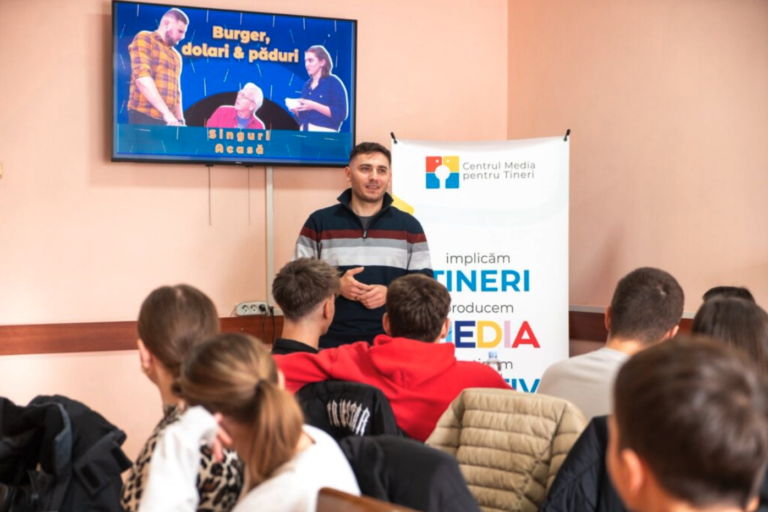
During the autumn of 2025, the media literacy series Home Alone, produced by the ICDC member Youth Media Centre, was presented in seven localities across the Republic of Moldova: Glodeni, Hîncești, Cantemir, Șoldănești, Cimișlia, Coșnița (with the participation of students from Grigoriopol), and Leova. The screenings brought together 188 young people from diverse educational and regional backgrounds, creating structured spaces for discussion on disinformation, manipulation, and informed decision-making.
The initiative also included students from the left bank of the Dniester River—learners from the “Ștefan cel Mare” Lyceum in Grigoriopol who currently attend classes in Coșnița, Dubăsari district. By bringing together young people from different social and geographic contexts, the events facilitated dialogue on how media content is produced, consumed, and interpreted in everyday life.
Home Alone is a fictional sitcom designed as an educational tool, addressing situations relevant to adolescents, including peer pressure, misinformation, online manipulation, the influence of social media, and digital dependency. Rather than offering prescriptive messages, the series presents realistic scenarios intended to encourage reflection and discussion.
Following the screenings, moderated discussions allowed participants to analyse characters’ choices, identify implicit messages, and explore broader themes such as online responsibility, stereotypes, and critical evaluation of information. Interactive formats, including quizzes, were used to reinforce key concepts and assess participants’ understanding in an accessible way.
Feedback collected during the sessions indicated that the combination of audiovisual content and facilitated discussion helped participants reflect more critically on their own media consumption habits. According to project representatives, the level of engagement exceeded initial expectations, with discussions often continuing beyond the formal activities.
Overall, the screenings demonstrated the potential of audiovisual formats to support media literacy education. By combining relatable narratives with guided dialogue, the initiative contributed to strengthening young people’s capacity for critical analysis, empathy, and informed decision-making in an increasingly complex information environment.
CICD (c) 2024