

Local and regional reflections on the lessons learned from Moldova on cooperation between civil society and media in countering FIMI during the September 2025 parliamentary elections
27 November 2025
Moldova’s 2025 parliamentary elections unfolded under extraordinary pressure, marked by foreign information manipulation, coordinated online influence operations, cyberattacks, covert financing and attempts to destabilize the public sphere. Despite this hostile environment, Moldovan civil society, independent media and fact-checking groups demonstrated a level of coordination that many experts described as rare in the region.
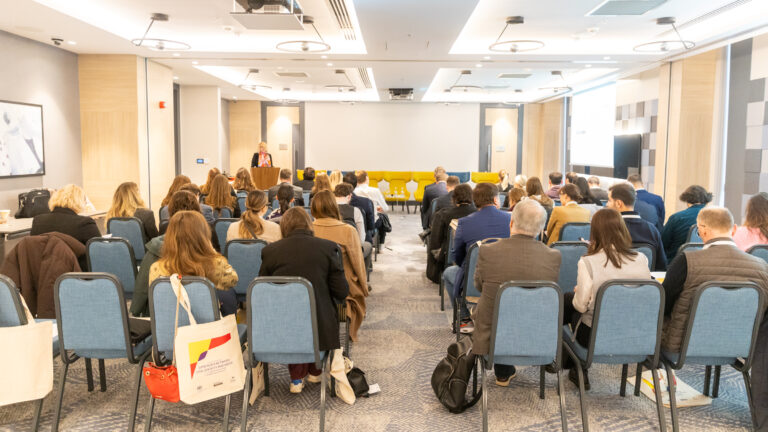
Fostering collaboration between civil society and independent media has been at the heart of the ICDC mission since 2023, when it was established. The culmination of this work was the regional conference held on 27 November in Chisinau. The event brought together civil society leaders, independent media, government representatives and international partners from Romania, Ukraine, Georgia, Bulgaria, Armenia, Latvia and Lithuania to reflect on Moldova’s recent experience countering FIMI during the parliamentary elections.
An emerging civil society–media synergy, supported by the ICDC, played a central role in Moldova’s response to unprecedented hybrid threats. Watchdog NGOs, independent journalists, fact-checkers and others jointly defended information integrity and electoral transparency through rapid-response coordination, shared data verification, citizen monitoring and narrative counterstrategies. Supported by international partners, these coalitions helped neutralize malign narratives and strengthen public trust in the democratic process. Because FIMI is inherently cross-border, Moldova’s experience offers valuable lessons for other Eastern European countries facing similar risks.
British Ambassador H.E. Fern Horine opened the event by noting that the 2025 elections were marked by “sophisticated, deliberate attempts to destabilize governance and silence independent voices.” She stressed that collaboration and rapid detection of malign narratives were Moldova’s strongest tools and highlighted the need to formalize cooperation beyond election periods and invest in long-term media literacy.
Throughout the conference, speakers described how this cooperation worked in practice and why it proved so effective. Many underlined that Moldova had not been disrupted by random misinformation but by deliberate attempts to erode trust in democratic institutions. Yet Moldovan actors responded with agility, data-driven coordination and a shared sense of purpose. This was possible because earlier election cycles had pushed civil society and media to learn, adapt and refine their methods over time. Each actor contributed essential strengths: watchdog organisations offered research capacity and monitoring tools; independent media provided broad reach and editorial expertise; fact-checking groups delivered rapid verification; and regional outlets contributed local insights. These pieces together formed a coordinated ecosystem able to detect harmful narratives early and communicate clear explanations to the public.
Regional reflections: shared risks, different realities
Speakers from Poland, Georgia, Ukraine, Romania, Latvia and Lithuania offered comparative perspectives on the tactics observed across the region. Several noted that the disinformation Moldova faced appeared simultaneously in their own contexts – often with similar language, emotional cues or targeted groups.
Across these contributions, Moldova’s elections were referenced as a practical example of how a coordinated civic–media ecosystem can be activated quickly in moments of pressure.
Gendered Disinformation: A Consistent Regional Pattern
One of the conference panels examined the rise of gendered disinformation targeting women in public life. Experts from Moldova, Georgia, Bulgaria and Armenia pointed to recurring patterns – sexualized narratives, personal attacks, moralizing content, and coordinated harassment campaigns aimed at discouraging political participation.
Despite differences in political systems and media environments, the trends were strikingly similar:
Speakers agreed that these campaigns do not only affect individual candidates, but also reinforce broader social barriers that keep women from entering politics.
Conclusion: Cooperation as Long-Term Infrastructure
The conference concluded with a shared understanding: Moldova’s resilience in 2025 was not the result of improvised reactions, but of long-term investment in collaboration between civil society, media and fact-checking groups.
Participants emphasized several key lessons for the region:
Moldova’s experience demonstrated that when civic and media actors work together in a structured, sustained manner, they can protect democratic processes even in a highly contested information environment.
Panel 1 – How Civil Society and Independent Media Held the Line During Moldova’s 2025 Elections
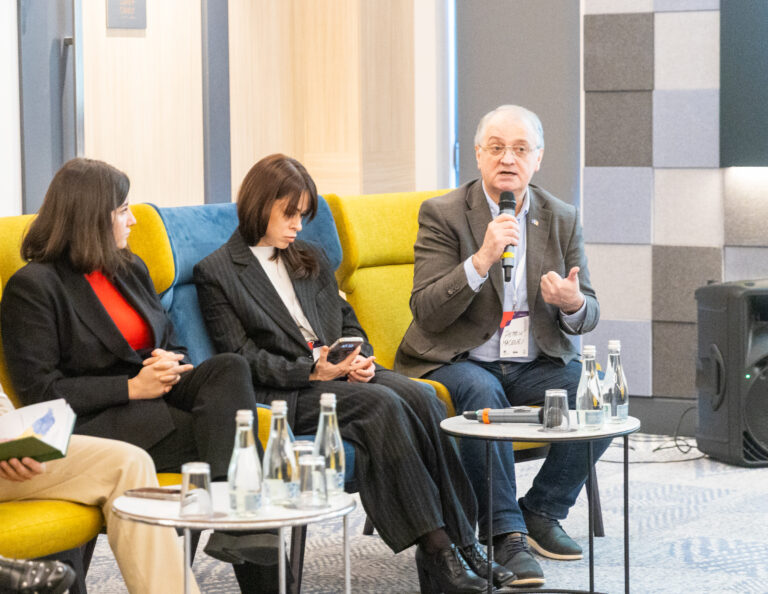
At the ICDC Regional Conference “Synergies Between Civil Society and Media – From Fragmented Voices to Collective Resilience,” the first panel told a story that defined Moldova’s 2025 parliamentary elections: resilience built through cooperation, not improvisation.
Despite coordinated foreign influence, cyberattacks, and an information space under constant pressure, Moldova’s civil society and independent media responded with an unprecedented level of unity – the kind that doesn’t just happen in a crisis but grows from years of learning and adaptation.
Petru Macovei (API) opened with a surprising fact: civic events across the country were packed. Public appetite for trustworthy information had grown, and investigative journalism reached wider audiences than ever – even leading to a fact-checking TV show that attracted more viewers than political debates.
But he also noted a key challenge: donor efforts sometimes overlapped. Better coordination is crucial if Moldova is to avoid repeating past inefficiencies.
WatchDog.md’s Andrei Curăraru described a shift in strategy. His team produced over 700 pieces of content for the media, generating more than 100 million views. But beyond volume, the real innovation came from anticipating narratives early and creating counter-speech before disinformation went viral.
The goal wasn’t simply to correct lies – it was to shape the information space before hostile actors did.
Irina Tabaranu (Zona de Securitate) outlined the unique challenge of Transnistria, where pro-Russian narratives feel “normal.” To reach these audiences, her team turned to local storytelling, relatable formats, and humour – approaches that draw attention in an environment otherwise dominated by fear and nostalgia.
For Mihail Sirkeli (NOKTA), the equation is simple: when people seek answers and legitimate actors stay silent, disinformation steps in. NOKTA’s blend of local reporting and expert commentary ensures communities do not rely solely on external – and often malicious – sources for explanations.
The Youth Media Centre’s Alexandru Ghețan explained how coordinating with 56 local partners and producing youth-friendly infotainment helped lift turnout among young voters and generated over 2.5 million views across Romanian- and Russian-language content. His message was simple: trust is built early. You cannot show up one month before elections and expect credibility.
GIZ’s Martina Karapusheva praised Moldova’s resilience but warned that cooperation must become a permanent structure, not a crisis reflex. Disinformation will exploit every policy gap and communication failure in the coming reform-heavy years.
Her call to action: institutionalise what worked and sustain support year-round.
Will this synergy last? Asked whether this cooperation was temporary, the speakers answered with cautious optimism. As long as the partnership remains value-based, media and civil society will continue to act together – not because of fear, but because they now understand the strength of collective action.
The takeaway
Panel 1 offered a clear message: Moldova didn’t resist interference by outspending or outmaneuvering hostile actors – it did so by working together.
Civil society, independent media, youth activists, regional reporters and international partners formed an ecosystem that defended information integrity when it mattered most.
And if the spirit of 2025 continues, Moldova won’t just be resilient during elections –
it will be resilient every day in between.
Panel 2 – International Perspectives: What the Region Learned from Moldova’s Democratic Resilience
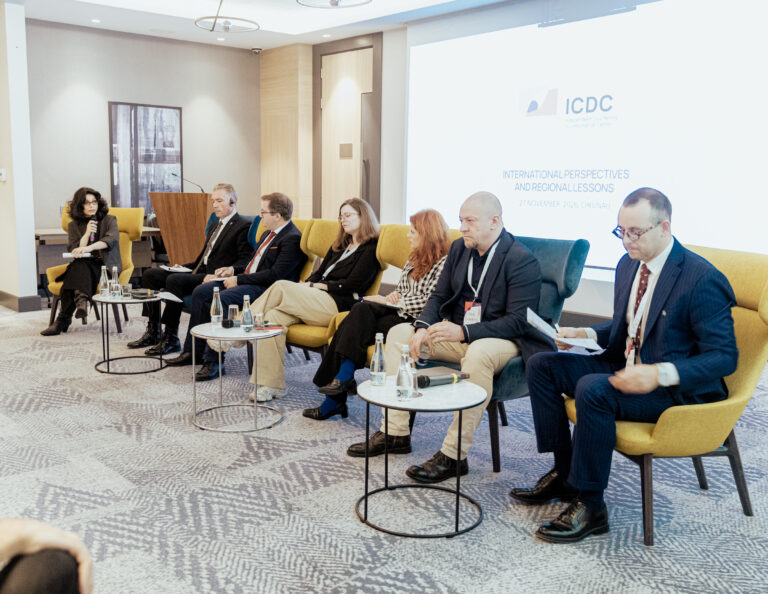
The second panel of the ICDC Regional Conference brought together experts from Poland, Georgia, Ukraine, Romania, Latvia and Lithuania to analyse Moldova’s 2025 parliamentary elections through a regional lens. Their collective message was unmistakable: the tactics used against Moldova are nearly identical to those seen across Eastern Europe, and Moldova’s response now serves as an example for the region.
Much of the international attention focused on how similar the hostile strategies were across borders. Kamil Basaj, Founder and President of INFO OPS Poland, explained that Russian operations rely on “very similar psychological metrics” regardless of the target country. He highlighted Moldova’s civic–media cooperation as “one of the great examples of how it can be effectively used against external threats,” recalling a moment when identical disinformation narratives appeared simultaneously in Moldova, Poland and Germany. For Basaj, Moldova’s model could form the foundation of stronger cross-border early-warning systems.
From Georgia, George Melashvili, President of the Europe-Georgia Institute, said the Moldovan elections were “very carefully observed” in Tbilisi. He drew clear parallels between Moldova’s experience and Georgia’s longstanding exposure to hybrid pressure, shaped by what he called a propaganda “unholy trinity”: messages from Moscow, local pro-Kremlin actors and imported far-right narratives. Melashvili warned that democracies must adapt to a state of permanent crisis – “the crisis is here, it will always be here… elections do not end it” – and argued that democratic actors cannot outmatch Russia on fear-based messaging. “We shall never be able to outfear Russia,” he said, insisting instead on projecting a positive and credible vision of the future.
Anastasiia Romaniuk of Civil Network OPORA from Ukraine explained why Moldova’s elections were watched with particular concern. A pro-Russian government in Chişinău would immediately shift Ukraine’s security landscape. She described the country’s wartime information environment as extremely fragile, noting that “more than 70% of Ukrainians get their news from Telegram,” a platform highly vulnerable to manipulation and largely outside state control. For Ukraine, Moldova’s playbook offers inspiration – but at a vastly different scale. The country now needs to adopt Moldova’s approach “on an Olympic scale,” Romaniuk argued, and must stop treating resilience as a miracle, instead institutionalizing what works.
Ana Mocanu, Executive Director of Funky Citizens from Romania, talked abou the contrast between the Moldovan and Romanian responses to electoral interference. Nearly a year after Romania’s annulled elections, she noted, there had been no comparable multi-stakeholder reflection. She criticised the widespread belief that Romania’s Russophobia alone provides protection, and she stressed the overlap between Moldovan and Romanian disinformation narratives – especially those focused on socio-economic fears and anti-Ukrainian sentiment. Mocanu described Moldova as “the adult in the room” when confronting disinformation and urged Romanian authorities to study and adopt the Moldovan model.
Representing Latvia, Ugis Libietis of the Latvian Institute of International Affairs admitted that Moldova’s elections initially attracted little attention in his country – but the deeper they looked, the more similarities they saw. Despite strong Baltic countermeasures, platforms such as Telegram remain almost impossible to regulate effectively. Libietis noted that older generations are typically the most susceptible to disinformation and cautioned politicians against mimicking online trends without understanding the culture of the platforms they enter. Echoing other speakers, he insisted that democracies must focus on offering positive narratives, adding: “It is easy to fight against something, but it’s much harder to fight for something.”
Tomas Kazulėnas, Director of the Civic Resilience Initiative from Lithuania, said that while Moldova’s elections received limited media coverage back home, they were considered extremely important. Moldova’s experience prompted questions about Lithuania’s own readiness for large-scale interference. He praised Moldova’s coordinated institutional approach, where intelligence agencies, law enforcement and the electoral commission worked in sync to prevent provocations and reduce risks – a level of preparedness Lithuania aims to strengthen.
A shared conclusion: resilience is intentional
Across the panel, participants converged on a central idea: Moldova’s resilience was not accidental. It was built through deliberate cooperation, steady coordination between civil society and media, and years of refining responses to hybrid threats. Moldova demonstrated that defending democracy under intense pressure is possible when actors choose collaboration over isolation.
As one speaker summed it up:
“We are stronger when we act as one – sharing information, sharing responsibility, and sharing the mission of protecting democracy.”
Panel 3 – Women in Politics and Gendered Disinformation: A Regional Challenge with Shared Solutions
The final panel of the ICDC Regional Conference, Women in Politics and Gendered Disinformation, explored how sexist narratives, coordinated online attacks and persistent gender stereotypes continue to shape women’s participation in public life across the region. The discussion brought together Moldovan speakers and regional experts from Georgia, Bulgaria and Armenia, who all recognised familiar patterns in their own countries.
Cristina Pereteatcu, State Secretary at the Ministry of Energy, highlighted the long-standing gender imbalance in Moldova’s energy sector, where leadership positions remain overwhelmingly male. She described situations in which her authority was doubted because of her gender or age, and stressed that women are still judged more harshly during election periods. Public debate, she noted, often gravitates toward a woman’s appearance rather than her achievements. An encouraging development, she added, is the emergence of the Women in Energy network, which is helping younger professionals build confidence and visibility.
Mariana Dimcenco, President of Strășeni District, spoke about the “parallel campaigns” waged against women candidates during the 2025 elections – not on policy grounds, but on their credibility as women. Attacks targeted their family lives, age, and motherhood, narratives rarely directed at male candidates. Drawing from her own experience as a young woman entering politics, Dimcenco emphasised that support for women must begin well before electoral campaigns, so that candidates are not forced to build resilience only when they are already under attack.
From the media side, Victoria Dodon, Center for Independent Journalism described how sexist narratives travel fastest on Facebook, Telegram and TikTok. Women public figures, notably President Maia Sandu, were targeted with misleading content focusing on personality and appearance rather than policy or governance. Dodon also warned about a rising trend of “soft disinformation” driven by entertainment influencers who, intentionally or not, reinforce harmful stereotypes under the guise of humour or lifestyle content. Newsrooms, she argued, must strengthen editorial standards and ensure more women experts are visible across media platforms.
Regional speakers echoed these experiences almost point for point.
In Georgia, said Tina Gogoladze of the Media Development Foundation, gender equality is often framed as a threat to national identity, contributing to sexualised attacks against women in politics and journalism.
In Bulgaria, researcher Kristina Tzabala noted that sexist narratives have intensified during repeated election cycles, including online campaigns that objectify or moralise about Ukrainian and Bulgarian women.
Talking about Armenia, communication strategist Narine Yeganyan explained how patriarchal norms continue to shape expectations about women’s roles, making women in politics – and even women involved in domestic violence cases – frequent targets of gendered disinformation that undermines their credibility and shifts blame onto victims.
Across the region, the patterns are strikingly similar:
attacks on appearance, morality, motherhood, age and personal life; disinformation amplified by local actors and external networks; and coordinated efforts to delegitimise women’s voices in public life.
Despite these challenges, the panel also recognised signs of progress. More women are entering leadership roles in Moldova and beyond, and cooperation between civil society and independent media is strengthening. These alliances – built on shared values rather than electoral cycles – are increasingly essential to countering gendered attacks.
At the closing of the panel, it was concluded that gendered disinformation is not only a women’s issue. It is a direct threat to democratic engagement and trust in institutions, demanding long-term strategies, sustained visibility for women leaders, and stronger regional cooperation. Democracies cannot thrive when half of society is pushed out of public life – and confronting gendered disinformation is a responsibility shared by all.
What the Region Needs Next: 10 Takeaways from the ICDC Regional Conference
The recommendations from the Conference in full can be read here.
Recommendations for Strengthening Resilience Against Disinformation in Moldova and the Region
The ICDC Regional Conference on 27 November 2025 showcased Moldova’s remarkable progress in countering foreign information manipulation and interference. But the discussions also underscored something deeper: resilience cannot be episodic. Moldova’s success in 2025 should not be viewed as a singular achievement, but as the beginning of a long-term, sustainable approach to democratic defense.
Speakers from across the region emphasised that Moldova’s experience resonates far beyond its borders. The same tactics used against Moldovan institutions, media and voters are visible in Romania, Georgia, Ukraine, Poland, Latvia, Lithuania and the wider neighborhood. The recommendation was clear: build structures, not moments.
Below is a set of ten recommendations that capture the lessons, priorities and shared ambitions expressed throughout the conference.
1. Institutionalize Resilience Mechanisms
Coordination among civil society, the media, and institutions must shift from ad hoc arrangements to permanent structures. Rapid response coalitions, joint StratCom units, and crisis protocols should be embedded in national policy and supported through stable, long-term funding. Election-season partnerships should become year-round platforms for democratic defense.
2. Shift From Reactive to Proactive Narratives
Debunking falsehoods is no longer sufficient. Actors must preempt disinformation by shaping compelling, hopeful narratives rooted in democratic values and tangible progress. A clear vision—grounded in integrity, opportunity, and alignment with Europe—should be consistently promoted, especially during high-risk periods.
3. Use Data-Driven and Audience-Tailored Communication
Disinformation campaigns are highly personalized; the response should be too. Civil society and media should leverage audience research, behavioral insights, and ethical targeting strategies to deliver credible messages that resonate. Different segments (urban vs. rural, youth vs. elderly) require differentiated content.
4. Expand Regional Cooperation and Intelligence Sharing
Disinformation is transnational. Moldova should scale its partnerships with neighboring countries to exchange best practices, co-design campaigns, and anticipate shared threats. Models such as Poland–Ukraine task forces or cross-Baltic StratCom platforms offer practical inspiration.
5. Strengthen Media Literacy—Including Among Older Generations
While youth engagement is essential, older voters are often more vulnerable and influential. Community events, popular TV formats, and trusted local figures should be mobilized to build media discernment. Digital education must become intergenerational.
6. Improve Donor Coordination and Sustainability
Speakers highlighted overlapping donor efforts and unsustainable project cycles. Donor strategies should prioritize coordination, multi-year commitments, and support for core operational needs rather than short-term campaigns. Evaluation metrics must reflect systemic resilience, not just content outputs.
7. Foster Institutional Trust and State–Civil Society Synergy
Resilience requires mutual understanding. Governments should be equipped to work with civil society and media actors as strategic partners, rather than merely service providers. Shared planning, clear communication channels, and respect for independence are key.
8. Regulate Information Platforms Without Silencing Expression
Several contributors warned that Telegram and similar platforms remain largely outside legal oversight. Governments must explore transparent, rights-respecting regulatory frameworks that allow for intervention against malign influence without restricting legitimate speech.
9. Normalize Cross-Border Narrative Defense
Countries facing common threats should coordinate not only intelligence but also narrative strategies. Misinformation targeting Moldova often echoes in Romania, Ukraine, or the Baltics. Shared values, synchronized messaging, and cultural diplomacy can reinforce collective resistance.
10. Invest in Human Infrastructure
Sustainable resilience is not only technical—it is human. Local journalists, youth groups, regional monitors, and community organizers are on the frontlines. Support must prioritize leadership development, emotional resilience, and networked solidarity.
Looking Ahead
These recommendations reflect both the urgency and the possibility of the moment. Moldova’s experience in 2025 demonstrated that resilience is built, not improvised, and that democracies are strongest when civil society, media, institutions and citizens act in concert. By embracing these ten commitments, Moldova and its regional partners can move from reacting to threats to shaping a secure, democratic future together.
CICD (c) 2024